European Union (EU) Ambassador Daniel Aristi-Gaztelumendi has called for support for institutions championing the fight against corruption, saying the vice has tangible and devastating consequences for ordinary Malawians.
The diplomat, speaking during the launch of the Office of the Director of Public Officers’ Declarations five-year Strategic Plan in Lilongwe yesterday, said corruption directly harms the economy, livelihoods and national infrastructure while eroding citizens’ confidence in public institutions; hence, should be nipped in the bud.
Gaztelumendi said that by strengthening public institutions such as the assets office, the Anti-Corruption Bureau (ACB) and other relevant bodies, the country will better position itself to combat graft and redirect resources lost through corruption toward national development.
He said: “Malawi’s future success depends on these efforts, because corruption erodes public trust, wastes scarce resources and undermines development. When we, as part of our EU-German co-funded partnership with the Government of Malawi, place our trust in an institution, we are not merely investing money.
“We are investing belief; belief that scarce resources will be used thoughtfully, belief that interventions will be designed to last, and belief that outcomes will be more than short-lived relief.”
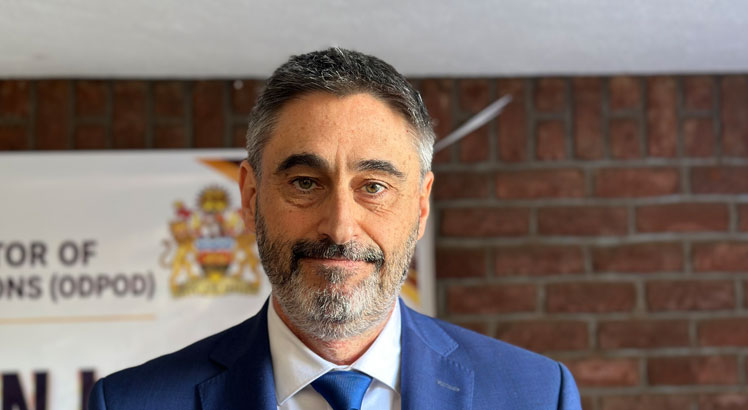
erodes public trust.
| Andrew Viano
In his remarks, the assets office’s director general Michael Chiusiwa said the office is seeking a review of the law to attain powers to sanction public officers who fail to declare their assets.
He said the institution’s mandate under the current legal framework ends at making recommendations to relevant authorities but through the new strategic plan, it is pursuing a legal review currently being undertaken by the Malawi Law Commission.
His remarks come at a time when about 17 percent of officers required to declare their assets defaulted during the 2024/25 declaration period but have not been punished despite the law prescribing punitive measures.
A report from the office presented to Parliament’s Public Appointments Committee (PAC) last week showed that out of 18 815 public officers required to declare assets, 15 553 complied and submitted their declarations by April 2025, representing an 83 percent compliance rate.
Chiusiwa said the Malawi Law Commission is reviewing the law establishing the office and that by the end of this year Parliament could pass the amendments.
He said: “We do not have enough powers to enforce the law. Currently, when somebody or a public officer has not complied, we don’t have powers to enforce the sanctions. Instead, we refer that public officer to relevant employers.”
Regarding this year’s declarations, Chiusiwa said the office is still processing submissions but with only 21 officers manually handling the documents, the process is complicated and the office cannot determine when the verification exercise will be completed.
Chief Secretary to the Government Justin Saidi said the government is committed to strengthening institutions that fight corruption, including the assets office.
He said the expectation is that the new strategic plan will strengthen the operations and effectiveness of the office.
“I believe with the system that has been outlined in the strategic plan, people will be able to declare their assets and eventually prevent corruption. Strengthening of the law so that those that do not declare are taken into account is also key in progress,” said Saidi.